


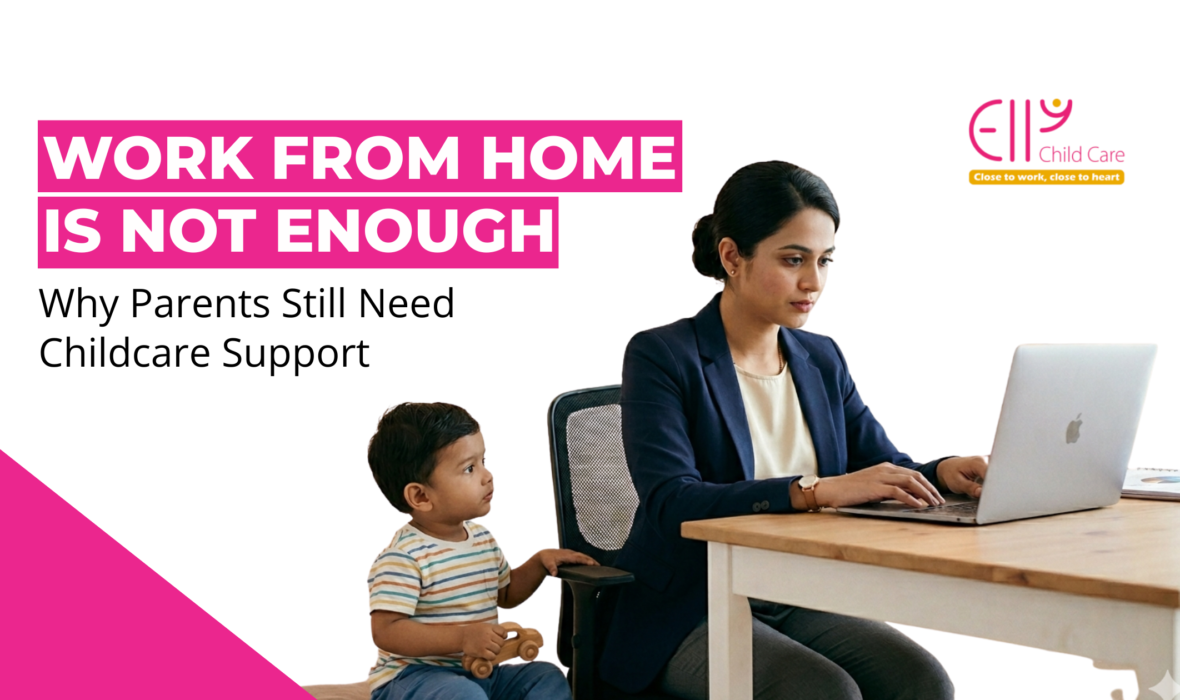
Working from home once felt like the answer many parents were waiting for. The idea of skipping long commutes, spending more time at home, and being around your child through the day sounded like the perfect balance between work and family life. On the surface, it still does.
But once the workday begins, that balance is not always as easy as it seems.
A typical day at home doesn’t follow a fixed plan. You may start with the intention of finishing a few important tasks while your child plays nearby or catching up on work during nap time. It feels manageable in theory. In reality, things rarely go as planned. Children need attention at unexpected moments, and work doesn’t pause to accommodate those needs.
This creates a constant overlap. You are replying to emails while keeping an eye on your child, stepping out of meetings to attend to something urgent, and returning to work already feeling behind. It’s not just about being busy; it’s about being pulled in two directions at the same time. Over time, this kind of routine becomes mentally exhausting.
Many parents quietly experience this pressure. There is an unspoken expectation to “handle it” because working from home is already seen as a benefit. But managing work responsibilities and childcare together, every single day, is not a small task. It often leads to a feeling that neither role is being done fully. Work feels rushed, and time with your child feels distracted.
This is where the emotional weight begins to show. Parents often find themselves dealing with guilt on both sides. There’s the feeling of not being present enough for their child, and at the same time, the worry of not performing well at work. It’s a cycle that can slowly build stress and fatigue without being immediately obvious.
Even today, when remote and hybrid work have become more common, childcare continues to be a real challenge for many families. The assumption that being at home removes the need for childcare simply doesn’t reflect how daily life actually works.
Because childcare is not just about supervision.
Children, especially in their early years, need structure, engagement, and interaction to grow. They benefit from routines that include play, learning, and social experiences. These are not things that can consistently happen in the background while a parent is focused on work.
At the same time, parents need the ability to concentrate without frequent interruptions. Having dedicated time to complete tasks not only improves productivity but also reduces stress. When that balance is missing, both work and personal life begin to feel overwhelming.
This is why many parents are now choosing to combine work-from-home flexibility with reliable childcare support. It is not about replacing the role of a parent, but about creating an environment where both the parent and the child can function better during the day.
Work from home has undoubtedly made life more flexible. It allows parents to be more present in small ways and reduces the stress that comes with daily travel. However, flexibility alone does not address the need for consistent care and attention that children require.
Recognising the need for support is not a weakness. In many ways, it is what makes a sustainable routine possible. When childcare support is in place, even for a few hours, it creates space for parents to focus on work and then return to their child with more attention and energy.
In the end, the goal is not to choose between work and parenting. It is to find a way to manage both without feeling constantly stretched. For many families today, that balance includes having dependable childcare as part of their daily routine.